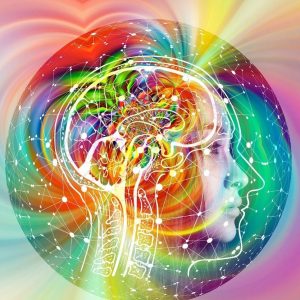
Many of us have experienced distressing and disconcerting waves of emotions when something triggers us suddenly and unexpectedly, leaving us destabilised and often unsure of what to do next. In fact, our brain may feel like jelly, unable to think clearly and come up with an appropriate response. You may have had the experience of being in a great mood until something, or someone, does or says something that makes you react emotionally. This can often be due to being reminded of a disturbing or traumatic event that happened in our past. It may have been the way someone spoke to or behaved towards us, or it may have been a place or object that made us feel irrationally upset. All of these things are known as ‘emotional triggers’. Quite simply, emotional triggers are events, things, experiences and even people who may cause our minds and bodies to react in disturbing ways. How to deal with emotional triggers involves several strategies to reduce their severity over time. They don’t disappear of their own accord; it takes being mindful and consistent in our approach to dealing with them.
Some common emotional triggers are:
Feeling that we’re being rejected
Feeling like someone may be abandoning us
Being ignored or snubbed
Being excluded
Feeling smothered or trapped by someone or something
Someone behaving in a ‘hot and cold’ or inconsistent way towards us.
Someone being judgmental or critical of us
Someone trying to control us
An argument with a loved one,
In fact, anything that causes an intense emotional reaction within us can be identified as an emotional trigger. Furthermore, when we’re emotionally triggered, we may find ourselves feeling off-kilter and catapulted into a frenzy of anxiety, guilt, or shame.
Once we become aware of our emotional triggers, the first thing we need to identify is where our triggers originate. Was the trigger related to something that occurred in our childhood or adolescence? Was the trigger something that happened in our education or career? Did a person we were in an intimate relationship with hurt or abuse us?
Some common ways we avoid triggers:
Sometimes when we’re triggered, we may try to soothe our anxiety by turning to unhelpful behaviours such as overeating, consuming too much alcohol, taking drugs, engaging in promiscuous behaviour, overworking, and gambling, etc.
We may also find ourselves engaging in unhelpful behaviours:
We may get angry
We may become needy
We may people-please to get someone else’s attention
We may unfairly blame others
If you identified with any of the avoidance strategies above, you may realise that by distracting yourself from a trigger by engaging in any of the above behaviours, you are only avoiding what you will have to deal with eventually anyway; the pain doesn’t magically disappear, and you may even find yourself in more pain going forward.
Learning to deal with emotional triggers:
Become aware of any physical symptoms you experience in response to particular situations:
Emotional triggers are often signalled by our senses swinging into action. A sensation, a noise, a particular scent or smell, something we taste or touch, can lead to us experiencing an emotional or behavioural response. Some physical symptoms are:
- Heart racing
- Heavy breathing
- Difficulty breathing
- Pain or muscle soreness in your neck, back, stomach or other parts of your body
- Sweating
- Dizziness
- Crying
- Other physical reactions
Learn to Pause: If you take time to pause when you can recognise when you’re getting triggered, you’re taking a break to allow yourself to respond instead of react to the trigger. Pausing also allows you to utilise various coping strategies. Pausing is a skill that takes practice because triggers occur in a fraction of a second, and it takes practice to become aware of the need to take a break while the trigger is occurring. So, until you learn to pause, practice some patience and self-compassion.
Acknowledge Your Emotions: Once you have calmed yourself, acknowledge your emotions, no matter what they are. You might be tempted to stifle your emotions because they feel uncomfortable, but being aware of and acknowledging your emotions is an important part of overcoming your triggers. When you suppress emotions, they tend to come back even stronger.
Use Healthy Coping Skills: Once you have paused, you can learn to use healthy coping strategies, including excusing yourself and taking a walk, breathing exercises and grounding exercises to slow down and to calm your mind and your body instead. Here are some other healthy coping skills: chrome-extension://efaidnbmnnnibpcajpcglclefindmkaj/https://www.sacredheart.edu/media/shu-media/counseling-center/101_Coping_Skills_ADA.pdf
Practice Mindfulness: Mindfulness practice can help you to stay anchored in the present moment. This can help you to recognise when something may be an emotional trigger. By doing this, we can mentally prepare ourselves to respond to these challenging situations in a way that provides safety for ourselves and those around us. https://sydneyhillscounselling.com.au/blog/mindfulness-for-mental-health-and-wellbeing/
The most effective way to learn to manage triggers is to seek professional help from a qualified, registered counsellor. Emotional triggers can significantly vary from individual to individual, and they only become more challenging to cope with when there are underlying issues such as childhood trauma, PTSD, depression, phobias, and mood disorders. For further information or to schedule a counselling session, please email us today at [email protected]. Sydney Hills Counselling offers face-to-face counselling and telehealth sessions via Zoom.
Please contact us today to see how we can help you. Due to a recent increase in inquiries, contacting us via email rather than calling us will ensure a timely response to your inquiry. You can also leave a voice message on (02) 9159-6277.
Copyright © 2021 by Sydney Hills Counselling